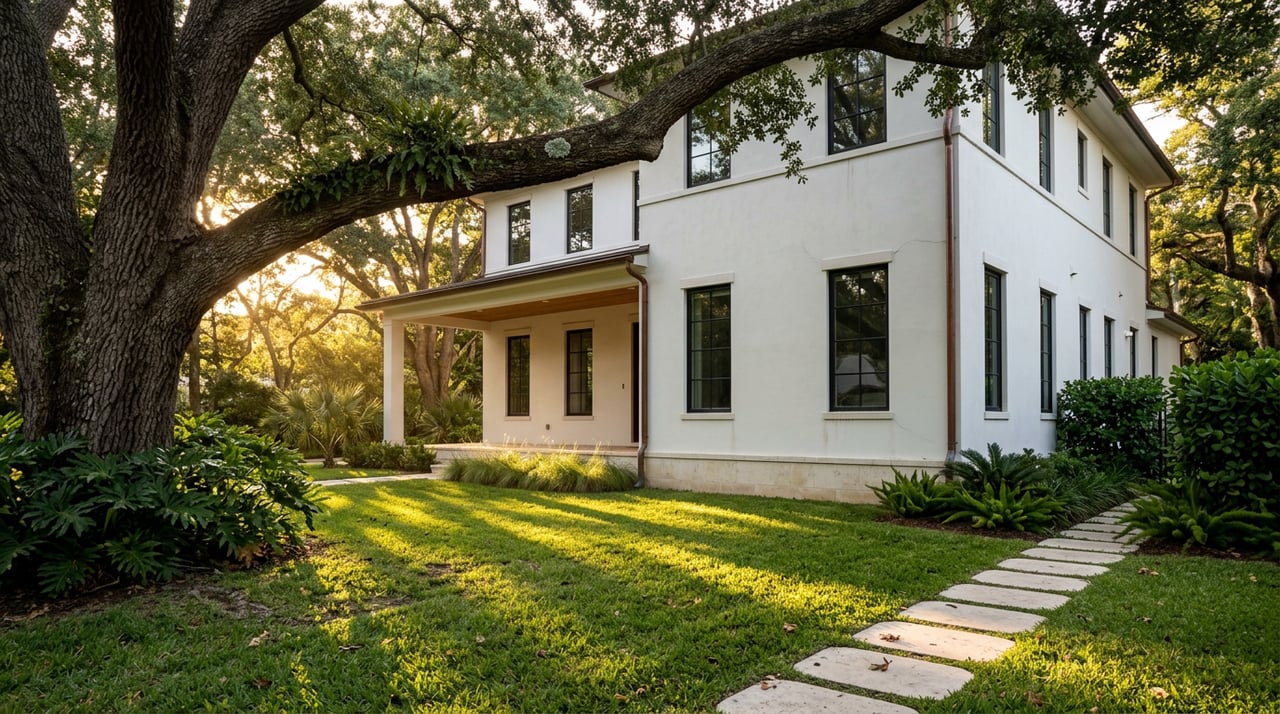
What Your Budget Actually Buys In Pinecrest Right Now
July 16, 2026
July 16, 2026
Open a national portal, type in Pinecrest, and the price filter tells you almost nothing useful. A million-dollar home and a four-million-dollar home sit two blocks apart, and the map dot for each looks identical. The headline range gives you a number without a mechanism.
The mechanism matters because Pinecrest in mid-2026 is not one market with a wide spread. It is two markets sitting inside the same ZIP code, priced by different buyers, sold on different timelines, and negotiated with different leverage. Which one you are actually shopping decides your strategy from the first showing.
At the entry tier, Pinecrest behaves like a competitive family neighborhood. Well-priced homes on standard lots move fast, and tight inventory has produced multiple-offer scenarios where prepared homes often sell above asking within the first two weeks. Buyers here are competing against other end users who want the lot, the canopy, and the quiet street.
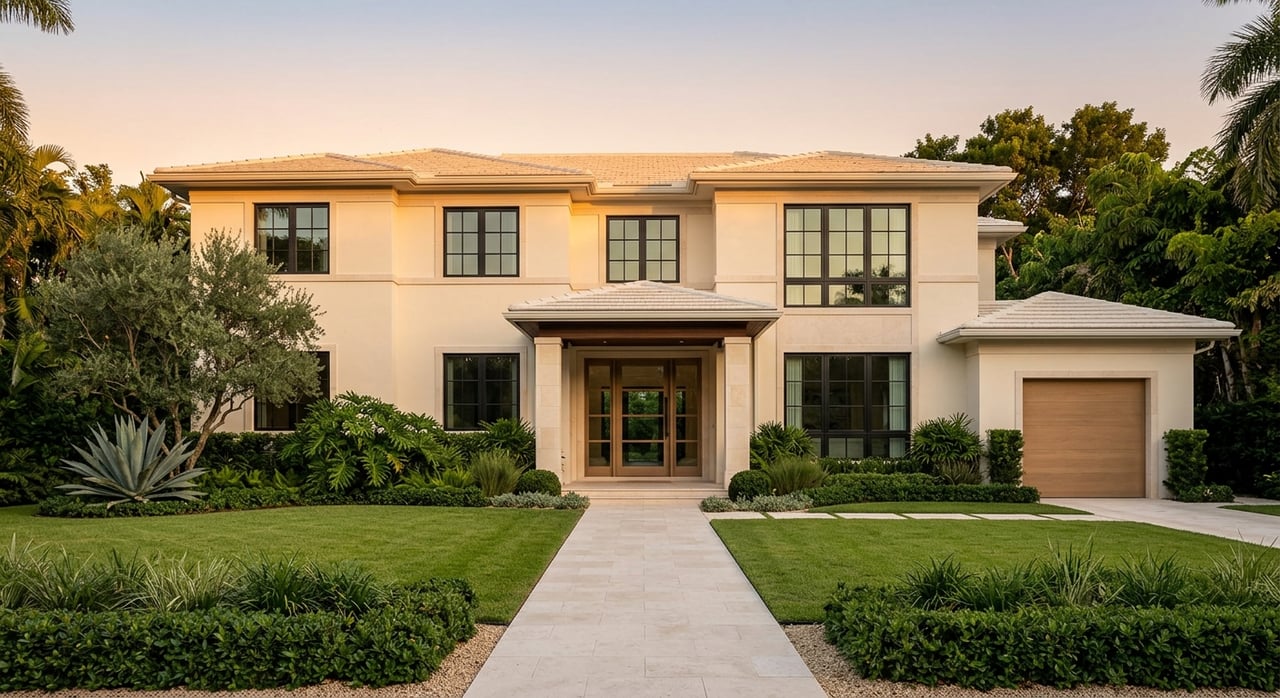
At the top tier, Pinecrest behaves like a luxury development market. The buyer is comparing a new-construction estate on an acre-plus parcel against comparable product in Ponce Davis or the deeper streets of Coral Gables. That buyer is not making a "starter" trade-off. That buyer is choosing between finished trophies.
The published range for Pinecrest runs from about $1M at entry to well above $4M for the larger estate parcels, where lot size and privacy carry the premium. The distance between those two numbers is not a smooth curve. It is a step function.
| Budget band | What the market delivers in mid-2026 | Primary friction |
|---|---|---|
| ~$1.0M to $1.6M | Updated older single-family homes on standard lots, often three or four bedrooms, canopy street, closer to the eastern side of the village | Competing offer pressure on the well-prepared listings |
| ~$1.6M to $2.75M | Larger renovated homes, some second-generation rebuilds, meaningful yards without full estate scale | Condition variance is enormous within the band; two homes at the same list can be a decade apart in real value |
| ~$2.75M to $4M | Newer construction or comprehensively rebuilt homes, larger lots, pool, room for a guest suite | Comparable data is thin because turnover is low, and appraisal against last year's closings can lag the market |
| $4M and above | New or near-new estate builds on acre-plus parcels, custom finishes, resort landscaping | A meaningful share of the best inventory trades quietly, and portal listings are not the full picture |
The gap between the entry tier and the estate tier is widening for a reason that has nothing to do with Pinecrest itself. It has to do with what is not being built next door.
Coral Gables and Coconut Grove have effectively run out of new dry-lot land for estate-scale construction. As new homes have become harder to find in those neighborhoods, developers have moved their focus to Pinecrest, where land is cheaper and lots are large enough to justify ground-up estate product. That developer attention has produced a small but influential pipeline of new estates at the top of the market, and each closing resets the ceiling.
The unincorporated pocket immediately to the north tells the same story from the other side. Ponce Davis sits between east and west Gables in unincorporated Miami-Dade, functions as a private expression of the Gables lifestyle, and features lots frequently exceeding 20,000 square feet, and a meaningful share of transactions there happen entirely off-market. Pinecrest's estate tier is priced against that comparable set, not against its own entry tier. That is why a family looking at a $1.4M three-bedroom and a family looking at a $4.5M new build are, functionally, in different neighborhoods.
Miami's luxury segment was measurably active early in the year. Q1 2026 posted a 21% increase in sales and 15.6% growth in dollar volume, with neighborhoods that combine structural scarcity and end-user demand, including Coral Gables, Coconut Grove, and Pinecrest, outperforming. That is the tailwind behind the estate-tier ceiling.
The transaction rhythm is also useful to know before you write an offer. Single-family homes in Miami-Dade have averaged roughly 50 days from listing to contract in Q1 2026 data. Inside Pinecrest, that county-wide number splits along the same two-market line. Entry-tier homes with correct pricing tend to run faster than the county average. Estate-tier listings with unique lots or new construction can sit longer while a small pool of qualified buyers works through diligence.
A few frictions surface repeatedly during actual transactions here:
The general county mood is calmer than a year ago. Inventory has climbed past 16,775 active listings across the county, days on market have lengthened, and for the first time in years informed buyers hold meaningful leverage. That leverage is real, and it is unevenly distributed. It shows up most clearly in condo inventory and least clearly in supply-constrained single-family pockets like Pinecrest.
Every serious Pinecrest buyer eventually asks the same question. If the estate tier keeps climbing, is there a comparable-lifestyle neighborhood at a friendlier price?
The honest answer is that the closest lifestyle substitute sits west, not north. The Baptist and Galloway corridor in Kendall offers Pinecrest-style living, meaning space, land, and residential calm, at up to roughly 30% lower pricing. That is a real spread, and for a buyer who is indifferent to the specific Pinecrest address, it is worth a serious afternoon of driving.
For most buyers who have already fixed on Pinecrest, though, the value question is not "which neighborhood" but "which street." Two lots on opposite sides of the village can price 40% apart for reasons that are entirely local: lot depth, tree canopy, proximity to a specific park, whether the block has seen recent teardowns. Those are the differences that a portal will not show and that a block-by-block read will.
Part of what buyers are paying for, at any tier, is the shared amenity. Pinecrest Gardens, the village's botanical garden and cultural park, sits on the original site of the historic Parrot Jungle, a Miami landmark dating to 1936 and now on the National Register of Historic Places, and hosts farmers markets, concerts, and festivals year-round. That kind of civic anchor is priced into every block within a reasonable walk, and it is one of the reasons the entry tier stays competitive even in a national slowdown.
Is now a good time to buy in Pinecrest specifically?
The county-wide leverage story is genuine, but it is concentrated in condos and higher-inventory suburbs. Pinecrest single-family homes, especially well-prepared listings under $2M, are still moving quickly. A buyer with strong preparation, clear priorities, and a willingness to act inside a compressed decision window will do better than one waiting for a broader price reset.
How much does new construction actually add to the number?
Enough to justify its own comp set. The developer pipeline that has moved south from the Gables and the Grove has established estate-tier pricing that older homes on similar lots cannot reach without a full rebuild. If you are shopping in the top band, the honest comparison is against other new builds, not against neighborhood averages.
Where is the value at the entry tier?
In condition, not in price per square foot. A home that has been maintained but not fully renovated will show more slowly, attract fewer showings, and often trade at a genuine discount to a staged, updated listing next door. For a buyer willing to do measured work, that gap is where the value lives.
What about off-market inventory?
At the top of the range, a meaningful portion of the best homes never hits public search. Buyers looking above $3M should assume the portal picture is incomplete and plan their search accordingly.
If you are weighing a move into Pinecrest, or considering how to price a home you already own here, a conversation grounded in current block-level data is worth more than another portal search. Erika Rodriguez works with buyers and sellers across Pinecrest, Coral Gables, and Coconut Grove, and can help you read what the numbers actually mean for your specific street. Let's connect.
Stay up to date on the latest real estate trends.

Experience a refined approach to real estate with Erika Rodriguez. Combining strategic insight, global reach, and dedicated service, she helps you discover exceptional properties that reflect your lifestyle and vision.
Let's Connect
ADDRESS
13595 SW 134th Ave
Miami FL 33186