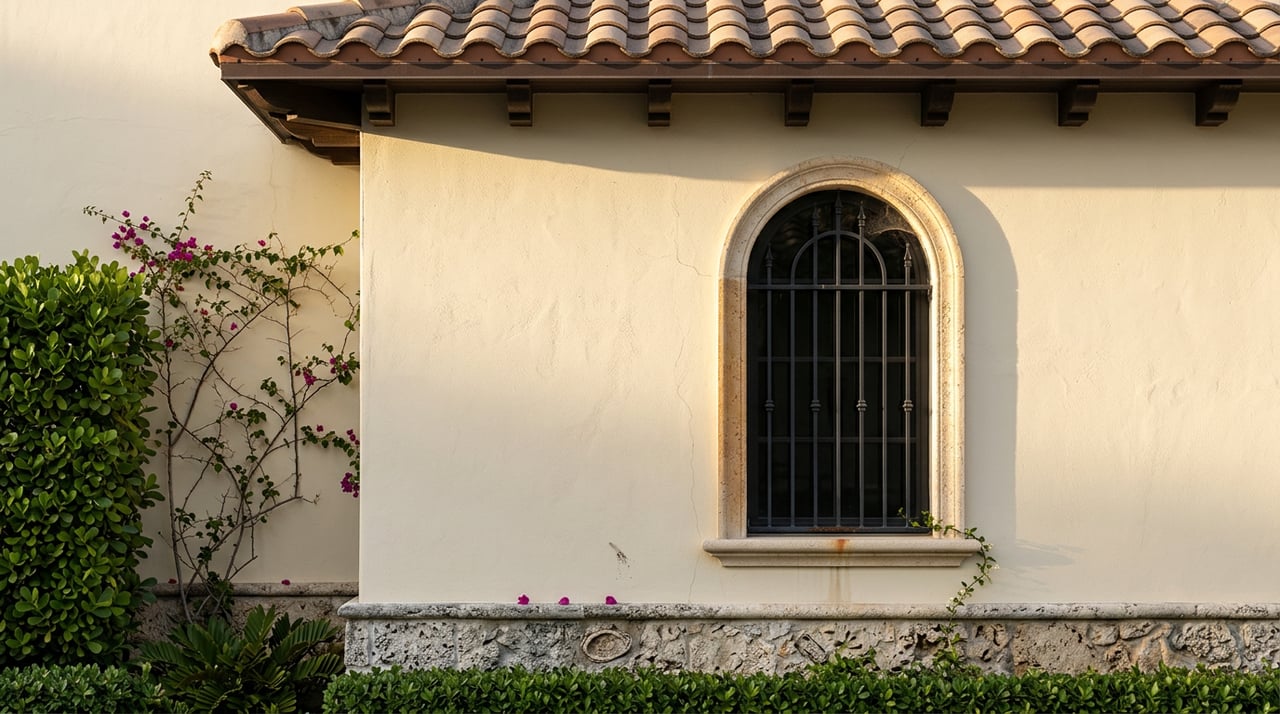
What Coral Gables' Board Of Architects Quietly Does To Your Closing Timeline
July 16, 2026
July 16, 2026
A buyer flies in from New York, tours a 1958 home off Granada, and imagines it in soft white with black windows and a new front door. The offer goes in that weekend. Two months after closing, they learn the paint color they picked is not on the city's approved list, the windows have to be redrawn to different proportions, and the pergola they wanted over the driveway needs its own review cycle.
None of that is unusual in Coral Gables. What is unusual is how few buyers price the review process into their offer, and how many sellers start exterior projects they cannot finish before listing.
Everything downstream of a Coral Gables transaction hinges on a single line drawn by the city: interior versus exterior. Interior renovations move directly to plan check at Development Services. Exterior work of almost any kind routes first through the Board of Architects, whose job under Section 5-100 of the Zoning Code is to judge whether a project satisfies the city's design review standards.
The Board meets every Thursday morning at the Development Services Building at 427 Biltmore Way. A tree survey and tree protection plan travel with the submittal, and for demolition permits the tree plan is mandatory before anything else can proceed.
That schedule is the constraint most buyers miss. Interior work is fast. Exterior work is a calendar problem.
The list of items that need the Board's sign-off is broader than most buyers assume. Based on the city's own scope and the way local architects describe the workflow, exterior work that requires review includes:
For properties inside a historic district or on a designated historic home, a Certificate of Appropriateness is required on top of standard review, and the work has to conform to the Secretary of the Interior's Standards for rehabilitation. That is a different threshold than the general Board review, and it is one buyers rarely understand until they close.
Here is the sequence a renovation-minded buyer is actually signing up for.
Interior renovations are unrestricted. Exterior alterations visible from public ways route through design review before you touch anything. Confirm your property's status and the scope of your planned work with the city before closing, not after.
For a buyer under contract, that math means a paint-and-windows refresh they mentally slotted into the first month of ownership is realistically a four to eight month project once the drawings, review cycles, and permitting stack up.
Anyone financing a purchase around a specific move-in date should ask three questions before removing contingencies.
Is the house in a historic district or individually designated? If yes, add a Certificate of Appropriateness cycle to every exterior line item on the wish list, and expect the city to apply the Secretary of the Interior's Standards to the review.
How much of the intended work is exterior versus interior? A buyer who wants a new kitchen, new baths, and refinished floors can start the day after closing. A buyer who wants those same items plus a new roof profile, a driveway reconfiguration, and a repaint is running two calendars, not one.
Has the seller been sitting on an unfinished review? Occasionally a listing includes a partially reviewed project that stalled. The right move is to ask for the file. The wrong move is to inherit it blind.
Recent Board agendas illustrate the volume and character of what the city is actively reviewing. At one meeting on the July 31 docket, sixteen applications were on the schedule, including new two-story residences at 35 Palermo Avenue, 931 Roderigo Avenue, 524 Mendoza Avenue, 2511 San Domingo Street, and 1915 Country Club Prado, alongside a rooftop pergola at a penthouse on Anderson Road. The design language proposed ranged from Old Florida to contemporary. The point is not the addresses. The point is that the Board is not a formality; it is a working design body that requests changes, and buyers should assume theirs will too.
The interior-exterior split is a gift to sellers who read it early. Anything that can be improved inside the envelope is fair game before listing: paint, floors, kitchens, baths, closets, lighting. None of it needs Board review.
Exterior projects behave differently. A seller who decides in April to repaint the facade before a June listing has misjudged the calendar. A seller who wants to replace tired windows with a cleaner black-frame profile is not doing that in a month. In both cases the smarter move is either to complete the work well ahead of listing or to price the home for the buyer who will do it, and to be transparent about the review process the next owner will face.
For sellers on properties where the exterior is already correct, the pre-listing conversation is different. A recent repaint in an approved color, documented Board approvals for prior additions, and a clean permit history are legitimate marketing assets in Coral Gables in a way they simply are not in unregulated markets.
Coral Gables is not one market. In July 2026 the median list price sat near $1.84 million with homes taking roughly 92 days to sell, while broader home-value indices that blend condos and houses placed typical values closer to $1.34 million. The gap is methodological, and it matters because the review calendar affects the two ends of the market differently.
At the top, waterfront tiers are pulling further away from inland resale. Analysis of long-run pricing shows Gables Estates trading at roughly three times the price per square foot of east-of-US1 resale in 2026, up from about 2.6 times a decade earlier. Buyers at that tier are usually delivering cash and paying for a finished asset. Review timelines matter less because they are rarely renovating on a deadline.
In the $1.5 million to $3 million band, the calculus flips. That segment carries the most financed buyers, the most renovation intent, and the most days on market. A well-presented interior with a compliant exterior sells. A dated exterior with an ambitious buyer plan often sits, because the buyer is quietly doing the review math and discounting the offer accordingly.
The strategic read for anyone in this band: the Board of Architects is not a tax on the market. It is a filter that rewards sellers who invest inside the envelope and price the exterior honestly, and rewards buyers who plan the sequence before they sign.
Does interior work really require no Board review? Correct, as long as it does not alter the exterior envelope. Interior permits still go through Building and Zoning for code compliance, but the Board is not involved.
Can I skip review for a repaint if I use the same color? No. Any change to exterior paint, including repainting in the existing color, requires Board approval.
How long does a typical exterior project take from first drawing to permit issuance? Plan on several months. Three to eight weeks per review cycle, often two to four cycles, then six to twelve weeks of plan check. Historic-district projects add a Certificate of Appropriateness on top of that.
Do I need a lawyer or lobbyist to submit? No, though the applicant or architect is generally expected to attend the meeting, and any paid representatives must register with the City Clerk's office under Florida's lobbyist rules.
What happens if a prior owner did unpermitted exterior work? It becomes the new owner's problem at the next transaction or the next project. This is one of the specific items a Coral Gables pre-closing review should surface.
If you are shopping a Coral Gables home with renovation plans, or preparing to list one and trying to decide which projects are worth starting, this is the kind of sequencing conversation worth having before the offer, not after. Erika Rodriguez works through these details with buyers and sellers across the Gables and neighboring markets. Let's connect.
Stay up to date on the latest real estate trends.

Experience a refined approach to real estate with Erika Rodriguez. Combining strategic insight, global reach, and dedicated service, she helps you discover exceptional properties that reflect your lifestyle and vision.
Let's Connect
ADDRESS
13595 SW 134th Ave
Miami FL 33186